Skip to the calculator
Bent duct elbow logoDuctRise

DuctRise calculators › Stair stringer calculator

Stair stringer calculator with a step diagram

Enter the finished floor-to-floor rise and this stair stringer calculator divides it into equal risers, then gives the rise per step, going, total run, stringer line length and stair angle. A stepped diagram of the flight is drawn with every result.


Advanced options


Calculations run in your browser. The numbers you enter are not sent to a server.

Worked stair stringer layouts

Each row uses a 7.75 in target rise and a 10 in going, the values the form starts with. The calculator rounds the riser count up so no step is taller than the target.

Finished riseRisersRise per stepTreadsTotal runStringer lineAngle
36 in57.200 in440 in49.29 in35.75°
57 in87.125 in770 in85.95 in35.47°
105 in147.500 in13130 in162.50 in36.87°
108 in147.714 in13130 in164.19 in37.65°
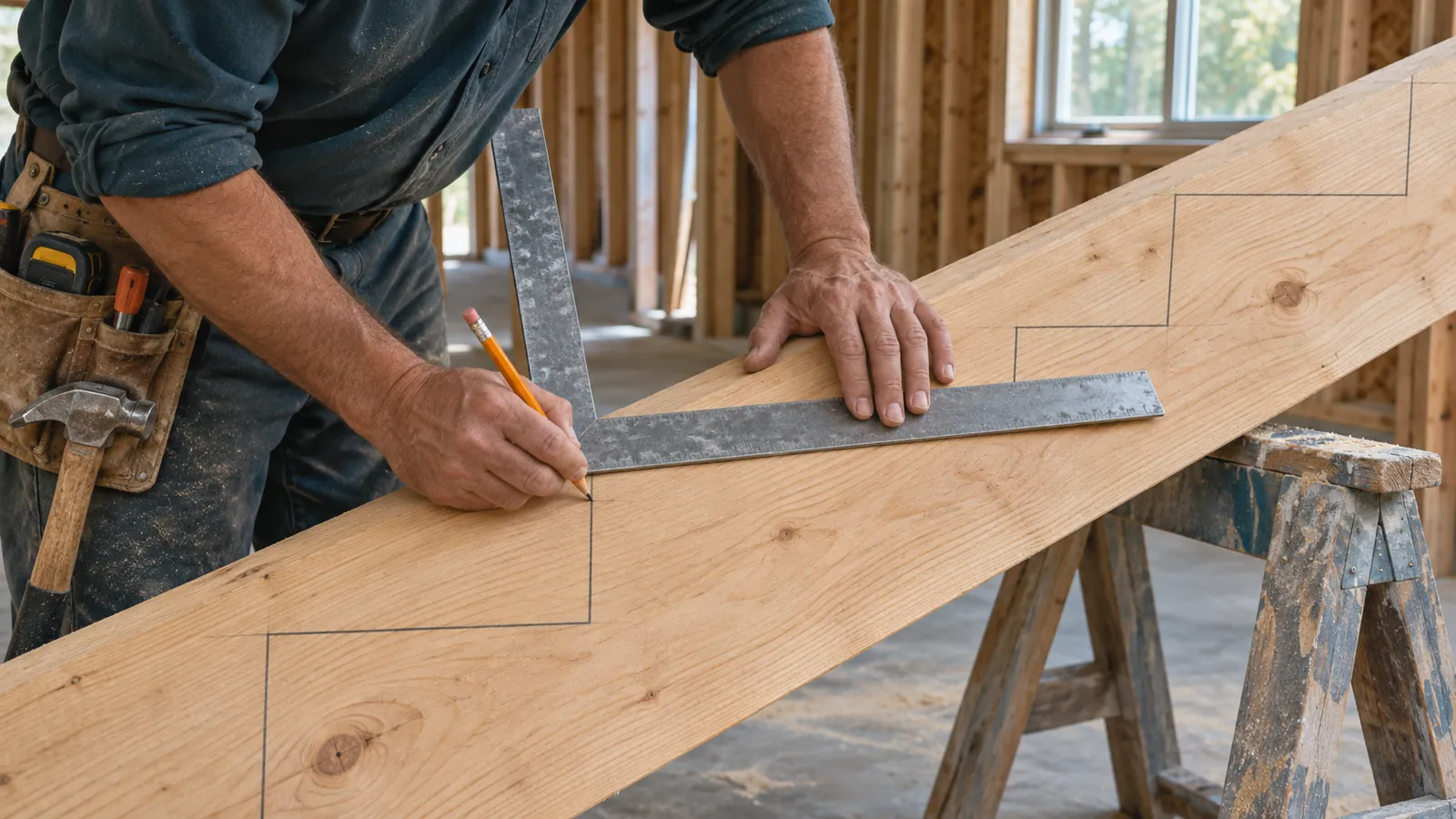
Illustration of a carpenter marking stepped rise and run lines on a stair stringer board with a framing square and a pencil
Illustration: the rise and run from the calculator are the two lengths marked step by step on the board.
Screen recording of the stair stringer calculator: a finished rise of 105 in is entered, Calculate gives 14 risers at 7.500 in with 13 treads, the stepped diagram appears below the form, and Advanced options is opened to show risers, target rise, tread thickness and total run
Screen recording of this calculator: a 105 in finished rise gives 14 risers of 7.500 in, 13 treads and a 130 in total run, and the stepped diagram is drawn below the form. Risers, target rise, tread thickness and total run sit under Advanced options.

Reading the stringer layout

Finished rise comes first

Measure from finished floor to finished floor, including any flooring that is not installed yet. Every other number depends on it.

The rise is divided into equal risers. Leave Risers blank to let the target rise decide the count, or type a count to force it.

Treads are one fewer than risers

The upper floor acts as the last tread, so a flight with 14 risers has 13 treads. Total run is the number of treads times the going.

If you have a fixed space, enter Total run and the going is worked out from it.

Stringer line and angle

Stringer line is the sloped distance from the first nosing to the last, the length the layout covers along the board. Your stock has to be longer to allow for the top and bottom cuts.

The angle is the pitch of that line, found from one rise over one going.

Tread thickness and the bottom cut

Tread thickness is subtracted from the first riser on the stringer so that the first step finishes at the same height as the rest.

The result flags a rise over 7.75 in or a going under 10 in. Those are common residential figures built into the tool as a prompt, not a code check: confirm the limits that apply to your project.

Stair stringer questions

How many risers do I need?

Divide the finished rise by your target rise and round up. For a 105 in rise and a 7.75 in target that is 13.55, so 14 risers at 7.5 in each.

Does this work for deck stairs?

The geometry is the same. Measure the finished rise from the landing pad or ground where the stair will actually sit to the top of the deck surface, because ground is rarely level across the run.

Will 2x12 stock work for my stringer?

The calculator gives the layout only. Whether a 2x12 leaves enough wood below the notches depends on your rise, going and span, and has to be checked against span tables or an engineer's advice.

Can it lay out a stair with a landing?

Not as one calculation. Treat each flight between floors and landings as its own stair and run the calculator once per flight with that flight's rise.

DuctRise runs every calculation in your browser. Results are geometry and airflow estimates for the numbers you enter. They are not a design approval or a code check.